
In the fast-paced world of the hotel industry, the key to profitability often lies in effective pricing strategies. Dynamic pricing a necessity. Booking windows, lead times, competition, and varying target groups all necessitate a constant need for adaptation. In the article “The Pricing Transformation in Hotels” we already mentioned the necessity to start working towards dynamic pricing. But dynamic pricing can only work as good as the rate plan it’s built on. A robust rate plan is a cornerstone that allows hotels to adapt quickly to market conditions.
Why Rate Plans are Crucial in Dynamic Pricing
Rate plans are the secret sauce that makes your dynamic pricing strategy work. They help in product differentiation by offering different room conditions, cancellation options.
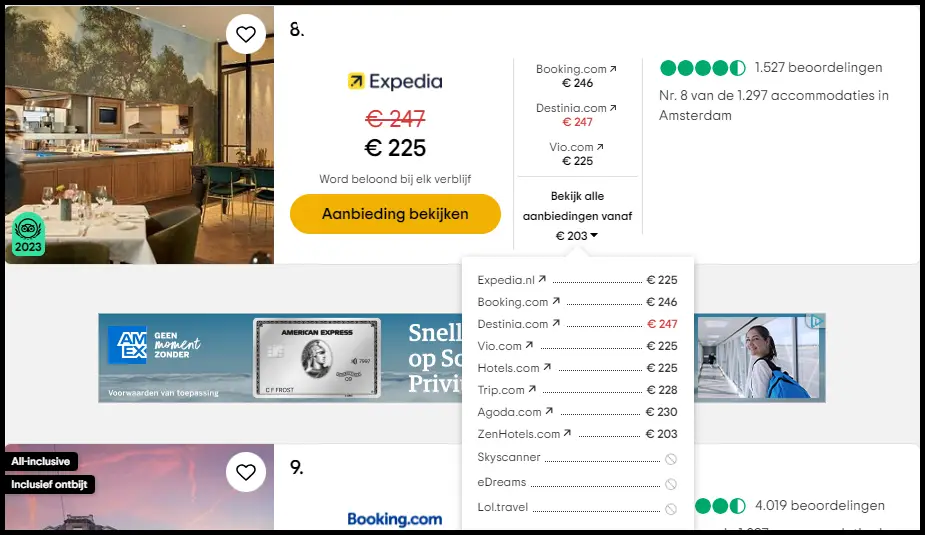
But what happens if you don’t have a well-thought-out rate plan? You run the risk of ending up with rate inconsistencies that can negatively impact both profitability and guest trust. A prime example is the proliferation of rates that can appear on metasearch engines like TripAdvisor and Google. These platforms aggregate all online rates, showing them side-by-side to potential guests.
Controlled rate differentiation can be an excellent strategy, particularly if your hotel has a strong market position. For example, an unnamed hotel in Amsterdam managed to offer the lowest rates on its own direct channels. However, the same hotel also displayed six different rates on indirect channels for the same date. This immediately creates an impression of inconsistency and lack of control. While differentiation is good, excessive variations like these can create a chaotic guest perception and dilute your brand’s value. This chaotic perception can further lead to insecure booking behavior. Making potential guests hesitant to finalize their reservation due to confusion and lack of trust.
Elements of a Robust Rate Plan
A robust rate plan should establish a hierarchy. Ideally featuring a parent rate plan that can influence multiple child rate plans. For example, consider having a parent rate plan—let’s call it DIRERO(Direct Room-Only with Flexible Cancellation). this rate plan is primarily distributed through your direct channels. Child rate plans can be connected to this parent rate for distribution through indirect channels. This hierarchical approach allows you to differentiate in pricing and availability between direct and indirect channels effectively.
One crucial aspect is that each rate plan will be connected to one or more room types and will have a defined distribution method. In other words, you need to specify which channels will offer which room types under what conditions. This level of detail allows you to fully optimize the distribution of your inventory.
Level of Customization
As for customization, not all PMS systems offer the same level of flexibility. However, generally speaking, a rate plan can be differentiated based on several key components:
Terms & Conditions: These specify the flexibility of the booking, such as whether the reservation can be canceled and refunded. Or when payment is due (upon arrival vs. direct payment).
Restrictions: These can include limitations such as the length of stay. For example, is a reservation available on a one-night basis, or is there a minimum length of stay required?
Additional Services: A rate plan can also include extras like breakfast, a welcome package, or even bike rentals to enhance the guest experience.
Rate plans also often allow for differentiation in timing. For instance, you could maximize the booking window by offering an Early Bird rate, which is bookable up to 60 days in advance of arrival. Or a Last-Minute deal which is only available from 7 days before arrival.
Once your rate plan is configured, you have the ability to adjust prices either manually or dynamically using a Revenue Management System (RMS). This provides hotels with the flexibility and control needed to remain competitive in an ever-changing marketplace.
How Technology Can Aid in Rate Plan Management
Proper rate plan management requires robust technology to remain competitive in the hotel industry. A Property Management System (PMS) serves as the foundation, but it alone cannot shoulder the complex task of rate distribution. This is especially true for medium-sized hotels, for which a Channel Manager becomes essential. These specialized systems are designed to ensure that real-time changes in Availability, Rates, and Inventory (ARI) are pushed to all connected channels.
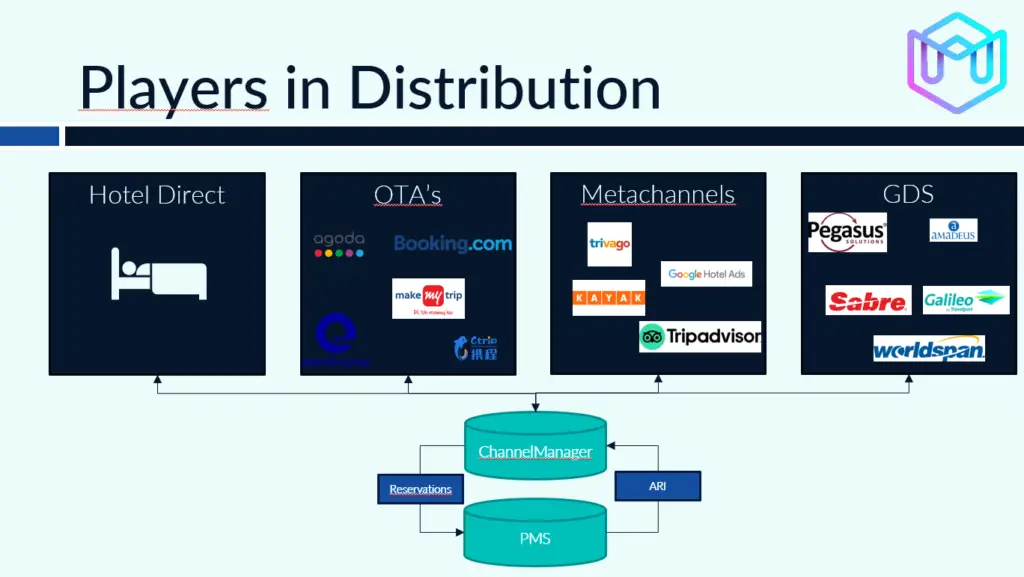
In this interconnected supply chain of ARI, a two-way connection is essential for ensuring real-time updates and maintaining consistency. The PMS is the backbone of your hotel inventory, categorizing rooms as available, out-of-order, or reserved. When you have a rate plan in place, the PMS sends this ‘available’ inventory to a Channel Manager. The Channel Manager then distributes it to various sales channels. In real-time a CM synchronizes with both the PMS for inventory data and with multiple channels for reservations. Whenever there is a change, it instantly updates all connected systems. This keeps your hotel’s ARI synchronized across all platforms, reducing the risk of overbookings and rate inconsistencies. Such a seamless technology integration ensures you’re not only competitive but also efficient in managing your rate plans.
Real-World Examples of Robust Rate Plans
Hotels with effective rate plan structures can respond nimbly to market fluctuations. The beauty of such a well-designed system is that a single adjustment to the parent rate can cascade down to all child rates. This centralized control can even be automated using Revenue Management Systems (RMS), thereby minimizing effort required for rate adjustments.
In practical terms, once you have the basics well configured, you’ll start noticing patterns and anomalies in demand. The configuration gives insights in different room types, cancellation policies, meal options and more. This is where the real art of rate plan management comes into play. By tracking the performance of rate plans, hotels can begin to fine-tune both between and within rate plans.
For example, let’s say the data reveals that Standard Rooms are usually booked to full capacity while Superior Rooms are often left unoccupied. A targeted strategy could involve optimizing room type supplements to drive higher occupancy for Standard Rooms. For example by offering additional amenities at a slightly higher price. On the flip side, if Superior Rooms are in high demand during particular periods, hotels could capitalize on this by adding an extra 10% to the rate.
The key takeaway here is that a robust rate plan doesn’t just set your pricing strategy on autopilot. It enables a dynamic, data-driven approach that can adapt to real-world conditions. It helps you to maximize your hotel revenue.
Steps to Establish Your own Robust Rate Plan
Creating a robust rate plan is an ongoing process that requires strategic planning, timely adjustments, and continuous monitoring. To get you started, here is a comprehensive checklist:
- Define Differentiation Levels: Consider to what extent you want to differentiate your pricing. Will it be based on room types, amenities, seasons, or special occasions?
- Establish a Rate Plan Hierarchy: Aim for a streamlined structure with one parent rate and multiple child rates. This will enable more efficient management and quick responsiveness to market changes.
- Understandable Naming: Your staff and guests should effortlessly understand what your rate plans mean.
- Configure Your Systems: Integrate the new rate plans into your Property Management System (PMS), and ensure they are connected to your Channel Manager and other distribution channels.
- Two-way Connections: Make sure your PMS and Channel Manager have two-way connections for real-time updates and synchronization of Availability, Rates, and Inventory (ARI).
- Implement RMS for Automation: If applicable, connect your Revenue Management System (RMS) for automated rate adjustments based on data analytics.
- Staff Training: Make sure your staff understands the new rate plans and how to work with them. This is essential for seamless execution.
- Guest Feedback: Keep an eye on Guest reviews and feedback to see how the new rate plans are being received.
- Performance Monitoring: Track production per rate plan to identify shifts in demand and supply. Use this data to make informed decisions.
- Iterative Refinement: Regularly revisit your rate plans to ensure they align with market trends and customer behavior. Make adjustments as needed to optimize yield.
Start Today, Get in Contact
Establishing a robust rate plan is more than an operational step—it’s a strategic move that boosts your dynamic pricing, unlocking unprecedented revenue potential for your hotel. If you’re looking to embark on the journey towards dynamic pricing, we’ve got your back. From planning and configuration to execution, MinersRepublic is here to provide comprehensive support. Don’t wait—reach out today for a personalized review of your current setup and explore untapped opportunities.